Obesity and GLP-1 in India: The Key Statistics (2026)
A single reference page for the numbers that matter: how many Indians live with obesity and diabetes, what the clinical trials showed, what treatment costs in 2026, and why Indian bodies face metabolic risk at lower weights. Updated as new data lands.
ALTRcare Medical Team
Clinical Editorial

This page collects the load-bearing numbers behind India's obesity and GLP-1 story in one place, with the study or source each comes from. We keep it updated as major datasets and trials publish. Figures are stated as reported by their sources; where estimates vary across studies, we say so.
How big is India's metabolic problem?
The ICMR-INDIAB study, the largest epidemiological survey of metabolic disease ever conducted in India, also estimated roughly 315 million Indians with hypertension and over 200 million with abdominal obesity, with abdominal obesity notably more common in women. NFHS-5 (2019 to 2021) found about 24% of Indian women and 23% of men overweight or obese by BMI, roughly double the rate of two decades earlier, with urban rates far higher than rural.
Why Indian thresholds are lower
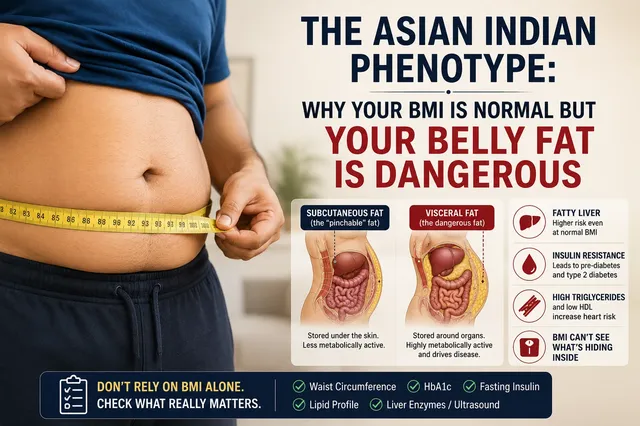
- Indian guidelines define overweight from BMI 23 and obesity from BMI 25, versus the WHO general cutoffs of 25 and 30, because South Asians develop diabetes and heart disease at lower BMIs.
- Waist circumference action thresholds for Indians are commonly cited as 90 cm for men and 80 cm for women, versus 102 and 88 cm in Western criteria.
- The driver is the thin-fat phenotype: at the same BMI, South Asians carry more visceral fat and less muscle than Europeans, so metabolic risk starts earlier.
What the GLP-1 trials showed
Two further trial results matter clinically: tirzepatide reduced sleep apnea severity enough to earn a dedicated obstructive sleep apnea approval (SURMOUNT-OSA, 2024), and semaglutide showed benefit in metabolic liver disease (the ESSENCE trial in MASH). GLP-1 treatment is increasingly cardiometabolic medicine, not only weight loss medicine.
What treatment costs in India in 2026
- Generic semaglutide (post-patent, March 2026): drug cost from under ₹2,000 a month; supervised doctor-led programs from around ₹3,499 a month.
- Branded semaglutide (Ozempic, Wegovy): roughly ₹5,500 to ₹16,000 a month depending on dose after 2026 price revisions.
- Tirzepatide (Mounjaro): roughly ₹13,000 to ₹16,500 a month at starting doses, higher at maintenance strengths.
- For comparison, bariatric surgery in India typically costs ₹3 to ₹6 lakh upfront.
Citing this page
Each statistic above names its source study (ICMR-INDIAB, NFHS-5, STEP 1, SURMOUNT-1, SELECT, SURMOUNT-OSA). Verify exact figures against the primary publications, and check this page's last-updated date; we revise it as new Indian data publishes.
Where do you fall in these numbers?
Check your BMI against Indian cutoffs and see whether medical weight loss fits your case. Free, 60 seconds, doctor-reviewed.
Frequently asked questions
How many people in India have obesity?
ICMR-INDIAB analyses estimate over 250 million Indians with generalised obesity and over 200 million with abdominal obesity, using Indian-specific cutoffs. NFHS-5 found roughly a quarter of adults overweight or obese by BMI.
What BMI counts as obese in India?
Indian guidelines define overweight from BMI 23 and obesity from BMI 25, lower than WHO general cutoffs, because South Asians develop metabolic disease at lower body weights.
How effective are GLP-1 medicines according to trials?
Semaglutide 2.4 mg averaged 14.9% body-weight loss over 68 weeks in STEP 1; tirzepatide 15 mg averaged 20.9% over 72 weeks in SURMOUNT-1. The SELECT trial also showed a 20% cut in major cardiovascular events with semaglutide.
What does GLP-1 treatment cost in India in 2026?
Generic semaglutide programs start around ₹3,499 a month all-in. Branded semaglutide runs roughly ₹5,500 to ₹16,000 monthly by dose, and tirzepatide roughly ₹14,000 and up.
Ready to take the next step?
Take the free 2-minute eligibility assessment. A doctor reviews it before anything is prescribed — no obligation.
This article is for general educational purposes and is not a substitute for personalised medical advice. GLP-1 medications are prescription-only and not suitable for everyone. Always consult a qualified doctor before starting, changing, or stopping any treatment.